The slides, written out
AI-drawn illustration. Simplified to explain the idea, not to scale.
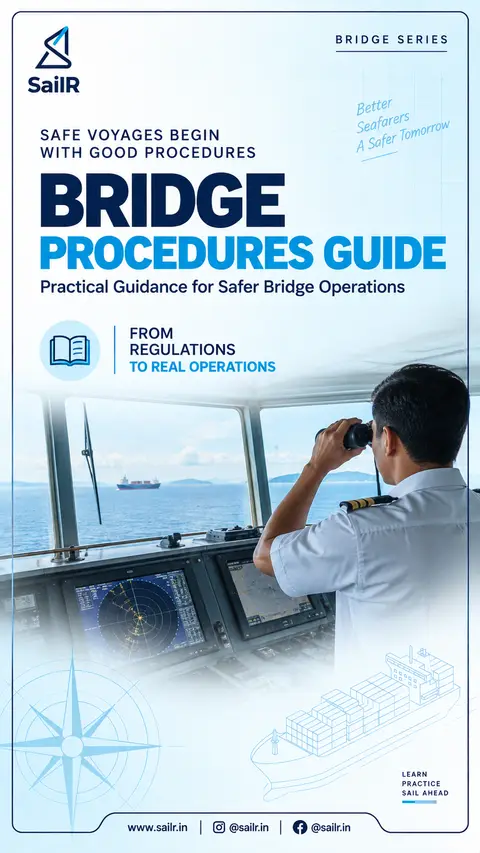
Slide 1 · BRIDGE SERIES
BRIDGE SERIES
Better Seafarers A Safer Tomorrow
SAFE VOYAGES BEGIN WITH GOOD PROCEDURES
BRIDGE
PROCEDURES GUIDE
Practical Guidance for Safer Bridge Operations
FROM REGULATIONS TO REAL OPERATIONS
Slide 2 · BRIDGE SERIES
BRIDGE SERIES
BRIDGE
PROCEDURES GUIDE
The Practical Guide to Safe Bridge Operations
The Bridge Procedures Guide (BPG) is an
International Chamber of Shipping (ICS)
industry guidance publication covering
safe bridge procedures and current
best practice.
The 6th Edition was published in
January 2022 and addresses modern
bridge technology, watchkeeping,
human factors, ECDIS, radar, GNSS,
pilotage and emergency procedures.
Bridge
Procedures Guide
Sixth Edition
January 2022
International
Chamber of Shipping
Shaping the Future of Shipping
Think of it as:
SOLAS & STCW
Mandatory framework
The what
BPG
Practical industry guidance
The how
Key Point
The BPG complements the SOLAS and STCW framework.
It is not itself a SOLAS convention text.
Exam Anchor
ICS Bridge Procedures Guide, 6th Edition
LEARN
PRACTICE
SAIL AHEAD
| |
Slide 3 · BRIDGE SERIES
BRIDGE SERIES
THE 4 STAGES OF
VOYAGE PLANNING
From Chart to Safe Arrival
A structured voyage plan is essential for a safe and efficient voyage.
It consists of four stages as per IMO Resolution A.893(21).
01
APPRAISAL
02
PLANNING
03
EXECUTION
04
MONITORING
01
APPRAISAL
Gather all relevant information
Charts and nautical publications
Notices to Mariners
Navigational warnings
Vessel condition and limitations
Manoeuvring characteristics
Weather and route information
02
PLANNING
Develop the detailed passage plan
Courses and waypoints
Wheel-over positions
No-go areas
Clearing bearings / safety margins
Pilotage areas
Contingency arrangements
03
EXECUTION
Put the plan into operation
Sail the approved plan
Consider actual weather
Monitor traffic conditions
Consider tidal conditions
Take account of vessel performance
Be alert to any developing hazards
04
MONITORING
Continuously verify and manage the voyage
Check position, course, speed and track
Compare with planned route
Detect deviations early
Assess the reason
Take appropriate action
Regulatory Anchor
SOLAS Chapter V Regulation 34
IMO Resolution A.893(21)
"A well planned voyage is a safer voyage."
| |
Slide 4 · BRIDGE SERIES
BRIDGE SERIES
BRIDGE WATCHKEEPING
& NAVIGATION
A Safe Bridge Starts with a Safe Watch
The OOW plays a key role in ensuring the safety of the ship, crew,
cargo and the marine environment.
OOW RESPONSIBILITIES
Maintain a safe and effective watch
• Maintain a proper lookout at all times
• Follow the Master's standing and night orders
• Maintain situational awareness
• Monitor the vessel's position and movement
• Call the Master in restricted visibility, traffic density or in any doubt
• Ensure a proper watch handover
LOOKOUT
A continuous and effective lookout is essential
• Use all available means
• Visual, hearing and other senses
• In conjunction with radar/ARPA
• Early detection of risk
• Comply with COLREGS Rule 5
BRIDGE EQUIPMENT
Use and cross-check all available navigation equipment
• ECDIS
• Radar / ARPA
• GNSS
• AIS
• Echo sounder
• Verify that equipment is operational
• Do not simply acknowledge alarms or warnings – identify, assess and act
AUTOMATIC STEERING
Understand and manage the steering mode
• Know the limitations of autopilot
• Ensure immediate availability of manual steering
• Follow correct changeover procedures
• Have a qualified helmsman in situations requiring special caution
SOLAS V/24 Use of heading and/or track control systems
FITNESS FOR DUTY
Rested crew make better decisions
• Comply with hours of rest requirements
• Manage fatigue
• Be physically and mentally fit for duty
• Effective watchkeeping relies on alert and well-rested personnel
STCW A-VIII/1 Prevention of fatigue and fitness for duty
HANDOVER
Ensure a clear and structured watch handover
• Exchange all relevant information
• Highlight any risks or developing situations
• Ensure continuity of the voyage plan
• Log important events
Exam Anchors
STCW A-II/1 | STCW A-VIII/1 | STCW A-VIII/2 | SOLAS V/24
| |
Slide 5 · GOOD BRIDGE PROCEDURES
GOOD BRIDGE PROCEDURES
LEAD TO SAFE VOYAGES
BRIDGE SERIES 4/4
Better Seafarers A Safer Tomorrow
PILOTAGE, EMERGENCIES & SURVEY READINESS
Be Prepared. Be Compliant. Be Ready.
MASTER – PILOT EXCHANGE
Share and confirm key information before and during pilotage.
Ship's characteristics
Navigational procedures
Local conditions
Applicable rules and regulations
Manoeuvring information
Pilotage arrangements
Complete and exchange the Pilot Card
IMO A.960(23) Recommendations on master–pilot information exchange
EMERGENCY READINESS
Be prepared for initial actions and established shipboard procedures.
Steering failure
Engine failure
Collision
Grounding
Man overboard
Loss of navigation capability
Distress situation
Regulatory reference for steering emergencies:
SOLAS V/26 Steering gear: Testing and drills
(V/26 specifically covers steering gear testing, changeover procedures and emergency steering drills)
BRIDGE DOCUMENTATION
Keep procedures up to date and properly filed.
Passage plans
Pre-arrival, arrival and departure checklists
Standing and night orders
Pilotage documentation
Emergency procedures
Records of navigation equipment checks
NAUTICAL PUBLICATIONS
Carry and maintain adequate and up-to-date charts and publications.
Charts appropriate to the voyage
Corrected and up to date
Notices to Mariners applied
List of charts and publications
Electronic charts (if fitted) verified
Back up arrangements
SOLAS V/27 Nautical charts and publications
KEY EXAM REMINDER
SOLAS V/20 ≠ Nautical Publications
SOLAS V/20 is about Voyage Data Recorders (VDR).
Correct: SOLAS V/27 – Nautical Charts and Publications.
"Prepared Bridge Teams Prevent Incidents."
| |
Drafted by SailR from our daily lessons. AI-drawn illustration. Simplified to explain the idea, not to scale. Last updated 19 Oct 2026.
Spotted a mistake?